

Building Risk Assessments – A Beginner’s Guide
By law, any business is required to carry out a risk assessment. The process involves identifying any potential hazards in the workplace, the risk associated with each hazard and subsequently implementing sensible measures to reduce and prevent harm. If your business has five or more employees, this should be a written document that helps to communicate and manage the risks associated with your business.
With a mounting focus on managing the health and safety of your workforce and with every business and its building being different, the task of carrying out a building risk assessment can seem a little overwhelming. The good news is, you don’t need to be a health and safety expert to do it, but we do appreciate the task can be complex and the thought of more paperwork is often met with a lack of enthusiasm, to say the least. That’s why we’ve put together our handy guide to assessing and reducing the risks associated with your business premises and to help make the process as smooth and efficient as possible.
Checklist for your Risk Assessment
For more detailed advice on the checklist for your risk assessment, head to the government website: https://www.hse.gov.uk/risk/controlling-risks.htm.
Below, we’ve summarised the process into four key areas to get you started.
Identify
For most workplaces, many of the hazards associated with working in your building will be obvious. Working with chemicals, or with machinery for example, pose an obvious risk to particular workplaces, whilst fire and security tend to be more universal risks for any workplace building.
Other hazards may be less visible and include the work-related mental ill-health that could be associated with working in your building. Poor lighting, cramped office space or lack of fresh air are all examples.
Whilst identifying the hazards, you may find it useful to speak to employees about their experiences working in your building to ensure your assessment is thorough and as part of the process you should identify who it is that is a risk as well as the hazard itself e.g. those in the building or passer’s by.
Assess
Once the hazards have been identified, you need to assess and evaluate the level of risk; high or low and the possible harm associated with each risk.
Here at Sovereign Fire and Security, we will work closely with you to assess the risks of your business premises. During the first consultation we will thoroughly analyse any risks – internal and external- that could negatively impact your business. The more we consider and discuss your worst-case scenarios, the greater your chances of preventing them by putting the right systems and procedures in place.
Control
Whilst many buildings will have similar hazards, it is important to adopt the control measures most appropriate to your business. Deciding on how best to control the risk may depend on who is at risk of harm and also your budget. If we consider the risk of fire for example, a detection and alarm system may be sufficient for your building, but if your building is two-or-more-stories high, a safe and well-maintained fire escape route would be a necessary part of your risk assessment too.
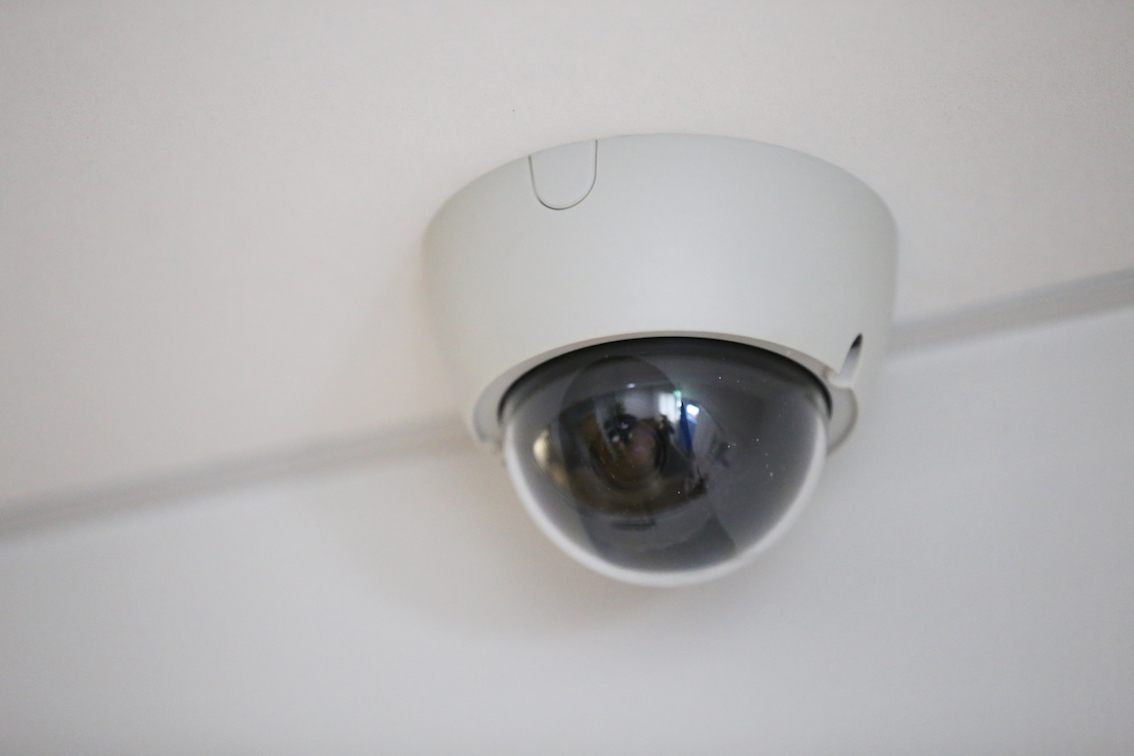
Thinking next about the risk of an intruder. For areas where crimes such as vandalism and burglaries are an issue, particularly if your building is left unattended, CCTV may be a sensible way to control the identified risks. In a larger building with a large body of staff such as a school, due to the number of people already in the building, it may be more difficult to spot intruders during open hours, therefore making card or fob entry systems appropriate to help reduce the risk of an intruder.
Here at Sovereign, we have a huge range of reliable and robust solutions for all your fire detection, alarms and intruder system requirements; from small stand-alone systems to a large multi-zoned networked system. Our extensive industry experience allows us to support you in designing a commercially viable solution that suits your individual needs and we will work with you to achieve cost savings by replacing manned security processes with remote solutions. For more information including design advice, installation, service and maintenance, get in touch with a member of our highly experienced team today.
Review
Finally, it is important to think of your building risk assessment as an ongoing document and one which should be reviewed regularly and updated if necessary. Installing a new appliance in a café kitchen for example, should be reviewed and your risk assessment updated accordingly. Making sure you refer to user manuals and instructions is a useful way of familiarising yourself with risks associated with new machinery and appliances.
For the fire and security needs of your building, here at Sovereign, all our systems are designed to be both robust and flexible, which allows them to grow and develop as your organisation changes. Better still, our service and maintenance team will ensure the smooth running and extended lifetime of your systems so that you can rest assured that reviewing and updating your building risk assessment needn’t be a burden to carry out.
Here at Sovereign, with 25 years of delivering excellence in fire and security systems, we are used to working with challenging requirements and can get an effective system that reduces fire and security risks to your building up and running with minimal disruption to your staff and customers. We are proud to be accredited with all the major fire, security and health & safety bodies and better still, our diligent after-sales and maintenance service means that we are always on hand, day or night, to help you manage and maintain your security so you know you can always rely on it.
Learn More with Sovereign Fire and Security
Our service team will also ensure you have the correct maintenance and standards cover, which most insurance companies will look for you to prove should you need to make a claim for theft, fire or personal injury.
It’s worth noting that if you already have a security system our team frequently take over maintenance contracts for products and services that have not been originally installed or provided by us, should you feel you are not getting the service that you deserve.
For more information on how our services and systems can reduce the risk of harm in your business premises, please do not hesitate to get in touch with a member of our expert team today.
Recent Articles
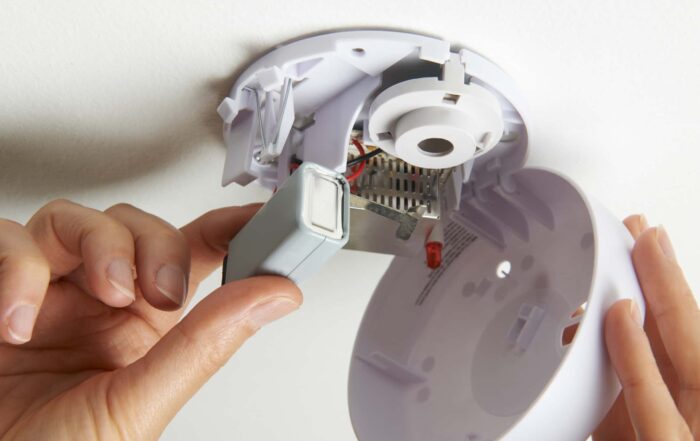
Innovations and Regulations for Smoke Detection and Fire Alarms
Making sure your fire safety systems are up to standards saves lives, protects your building, and ensures you’re compliant with government regulations. However, with so many types of alarm systems [...]
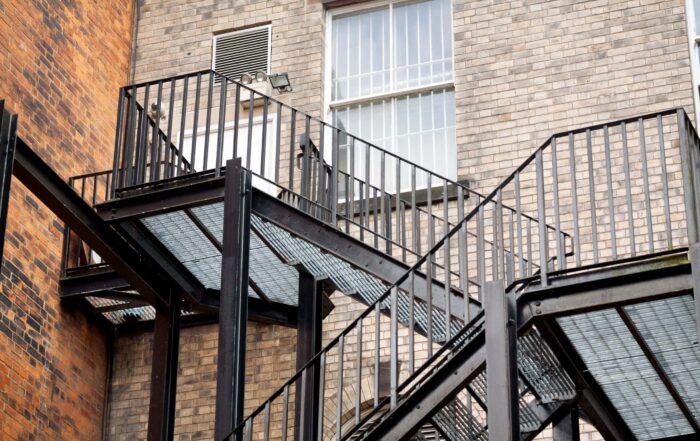
Fire and Security – The Complete Guide to Fire Escape Regulations in the UK
Fire risks are real, with 622,173 incidents attended by Fire and Rescue Services in England for the year ending March 2023. Many things can keep you safe from fires. But [...]
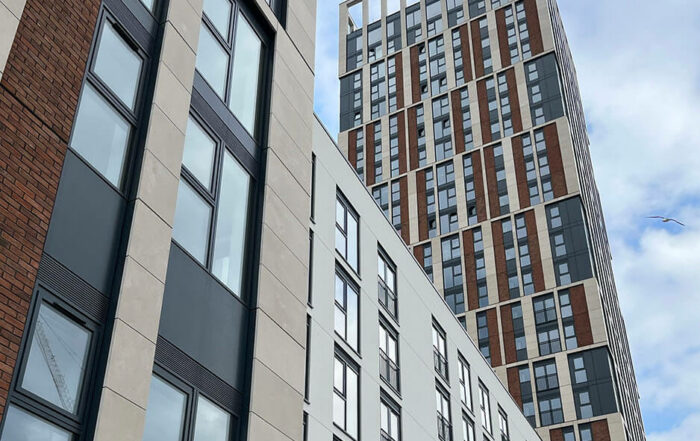
Fire Safety for Mixed-Use Buildings
Ensuring you have up to date fire safety systems for your mixed-use building isn’t just a good way to keep your residents and structure safe and secure – it is a legal requirement. [...]